Case Study
Project Studio
GitLab was built for humans doing manual work. This is what comes next.
Overview
"Just want you to know how grateful I am that you invented and drove Studio to this point. Now that I can see it in production I am even more impressed with the design and all the work you and the team did in such a short period of time. I hope you are exceptionally proud of what you've done. This is going to change GitLab's trajectory for the coming years, and we are just getting started."
GitLab key stakeholder, direct message after Project Studio shipped to production
GitLab Duo was buried in a drawer. Technically present, practically invisible, and completely disconnected from the workflows it was supposed to improve. As GitLab moved to position GitLab Duo as a premier AI experience and key revenue driver, the product's interface told a different story.
Project Studio was the answer. A 12-week effort across 10 parallel workstreams to reimagine GitLab as an AI-native platform, move GitLab Duo from a hidden afterthought to a persistent first-class citizen, and lay the architectural foundation for everything that comes next.
I led the design across all of it.
The problem
Previous attempts to solve GitLab's navigation and AI integration had stalled. The complexity was real, the risk was high, and the organizational will to take it on never quite materialized. I'd watched it happen before.
What changed was a conversation with executive leadership. I told them honestly that doing this right would take a full year. They said I could ask for anything or anyone I needed. That level of alignment unlocked something previous attempts never had: instead of teams arguing over what to do, everyone figured out their role and started contributing. My job became keeping the path clear.
The core problem had two parts. First, the existing interface was built for human-only workflows. AI had been added on top through overlapping drawers that interrupted context rather than supporting it. Second, GitLab Duo had no coherent home. Features were scattered, the interaction model was inconsistent, and there was no concept of GitLab Duo as a persistent, context-aware collaborator.
We weren't going to fix this by reorganizing the navigation. We needed to rethink the architecture.
Design principles
Before any design work started, I established four principles that every team could use to evaluate decisions without needing me in the room.
AI as a premier experience. GitLab Duo is not a secondary feature. It deserves prominent, persistent placement in the interface and should be treated as a first-class citizen at every design decision point.
Respect user flow. AI assistance should be available when needed and invisible when not. Nothing should interrupt a user's context to announce its own presence.
Context awareness. Whatever a user is working on in the main panel should inform what GitLab Duo knows and offers. The right side of the screen should always understand the left.
Progressive disclosure. Users should be able to access GitLab Duo at different depths, from a quick suggestion to a full collaborative session, without being forced into one mode.
These weren't aspirational statements. They were a litmus test. Any design that failed them got revised.
The architecture
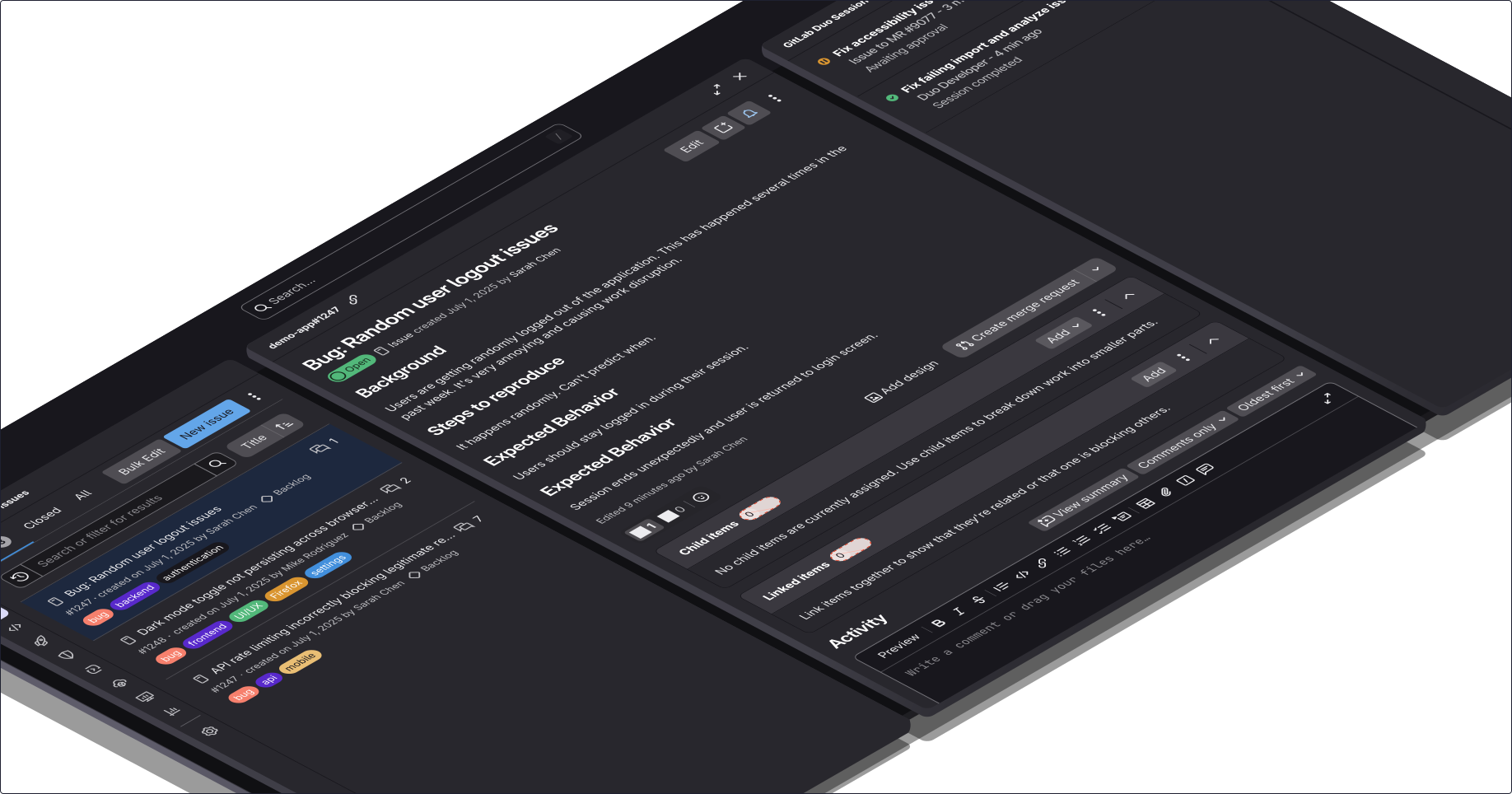
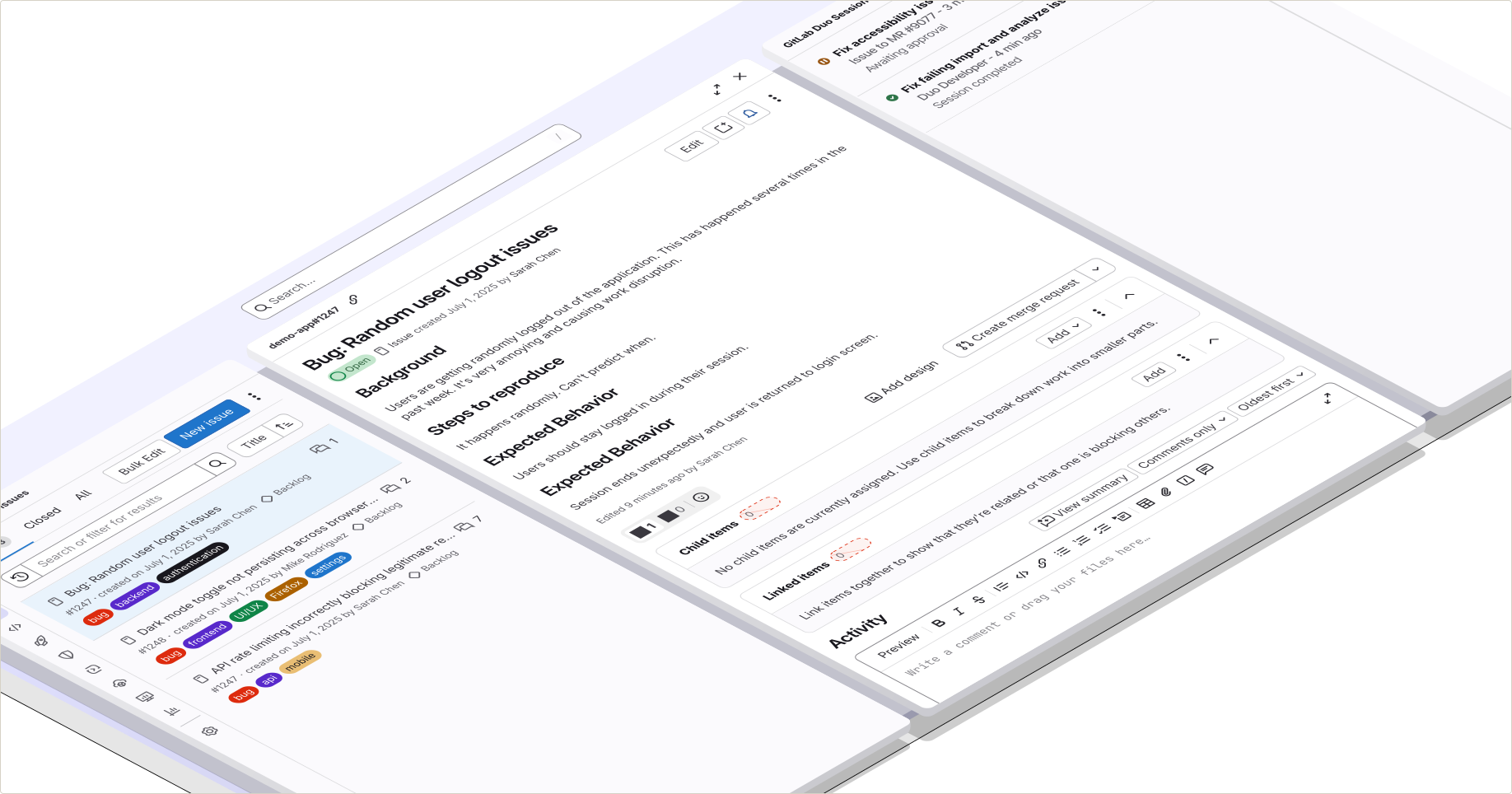
The central decision was moving from overlapping drawers to a panel-based system. Drawers create cognitive overhead because they obscure content and force users to choose between seeing their work and getting help with it. Panels let both coexist.
The system supports up to three panels simultaneously: the static navigation, a dynamic content panel tied to the current context, and the persistent GitLab Duo panel on the right. Each has a clear role. None compete for the same space.
The GitLab Duo panel itself became a hub with three views: Chat for direct interaction, Sessions for tracking and resuming agent history, and Smart Suggestions for contextual recommendations based on what the user is actively doing.
I also defined two interaction modes for GitLab Duo. Collaborate mode keeps the human in control, with GitLab Duo offering and the user deciding. Delegate mode lets the user hand off a task entirely. The distinction matters because it maps to how people actually think about AI assistance depending on what they are doing and how much they trust the output.
One of the harder questions I had to answer publicly was whether this was just reverting to what we had before the Super Sidebar. The honest answer: in some ways, yes. We brought back navigation patterns that SUS feedback told us worked better. But that framing misses the point entirely. The chrome changes were in service of the AI platform. Anyone focused on the navigation was looking at the wrong thing. The real story was giving GitLab Duo the permanent, context-aware home it needed to become a product differentiator.
Leading across 10 workstreams
With 10 teams working in parallel, the quality risk is diffuse. Any one team making a local decision that conflicts with the system can create inconsistencies that are expensive to fix after the fact.
I handled this two ways.
The first was creating enough clarity upfront that teams could make good decisions without me. The design direction document, the principles, the panel architecture, the wireframes. If the foundation was solid, the decisions that built on top of it would be too.
The second was staying hands-on in code review. I noticed one workstream holding changes until the end of each milestone, creating a predictable crunch and a window where regressions could slip through undetected. I talked with the engineering manager and identified two things I could do: protect the team from leadership requests mid-iteration by presenting any additions as explicit tradeoffs, and get into the diffs myself to catch UX issues before they merged.
We were shipping changes against both the current UI and the new one simultaneously. Regressions were common without oversight. Being in the code meant I could intervene early and keep the other designers focused on their own workstreams rather than splitting attention across regression watch.
The tradeoff framing for leadership interruptions worked consistently. When someone senior had a request mid-iteration, I would present it as a choice: here is what we would need to cut to accommodate this. Most of the time the new request did not survive that question. People discovered quickly how much they actually wanted the addition versus what was already in flight.
The thing I am most proud of is not the system itself. It is what happened when I put people in positions where they were empowered to use their skillsets best. They crushed it. Designers who had been waiting for a clear direction found their footing and ran with it. Engineers who understood the architecture made decisions I never had to review. I was lucky to have had such strong engineering leadership and product leaders alongside me. The outcome was theirs as much as mine.
Shipping it
We compressed what I estimated as a year of work into 12 weeks. The resources and alignment executive leadership unlocked made that possible, but the approach mattered too.
I gave ground on details that were not load-bearing. Not because quality did not matter, but because momentum did, and because we could always come back. Progress over perfection, with a clear-eyed view of what was actually structural versus what was polish.
The rollout used feature flags for gradual adoption, with a feedback issue open to the wider community. The opt-out rate was under 1%. Reading through the responses, the main thing users wanted was more of it. The panel system and persistent GitLab Duo worked. They just wanted it to reach further into the product, beyond work items and the GitLab Duo panel where it launched.
That is exactly what is happening now. What started as a direction in my head is being carried organically by teams across the organization. That is the outcome I care about most.
Results
- ✓ 99.4% user adoption
- ✓ 6x WAU growth for GitLab Duo reported in FY26Q2
- ✓ Discretionary bonus awarded for UX leadership excellence
- ✓ Executive recognition for impact on company trajectory
- ✓ Framework adopted across teams: the drawer-to-panel conversion pattern is now standard guidance in Pajamas